What the Strategic Business Leadership Program at Prince Mohammed Bin Salman College of Business and Entrepreneurship and the Islamic Development Bank Institute taught me about human capability, shared prosperity, and the responsibility to multiply impact in Pakistan.
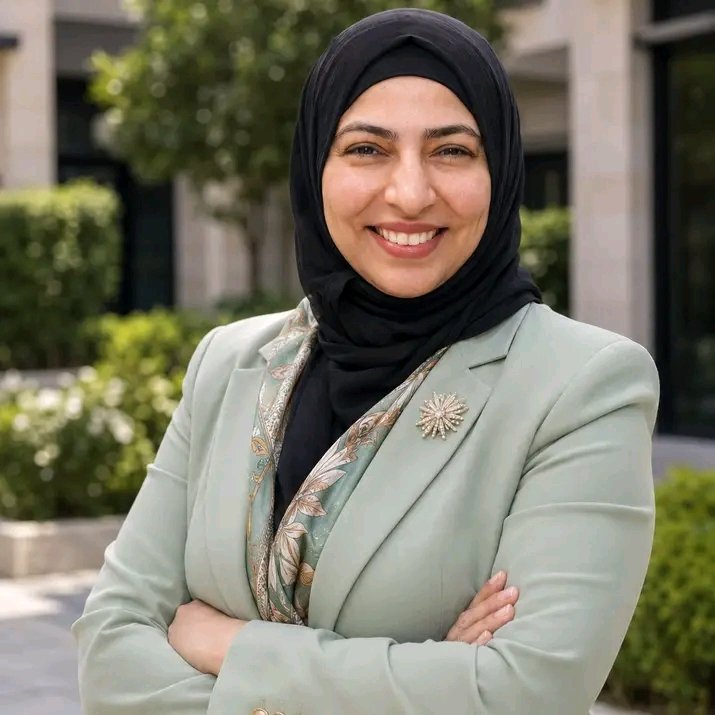
By Tabinda Islam
Thirty leaders. Fifteen countries. Ten intensive days.
Those numbers describe the Strategic Business Leadership Program 2026, but they do not fully explain what happened in the room. The cohort brought together senior professionals from Pakistan, Nigeria, Egypt, Indonesia, Kazakhstan, Saudi Arabia, Yemen, Kenya, Bangladesh, Somalia, Mozambique, Uzbekistan, Niger, Ghana and Morocco. Their backgrounds ranged from banking and finance to technology, development, engineering, agriculture, energy, entrepreneurship, media, humanitarian work and the public sector.
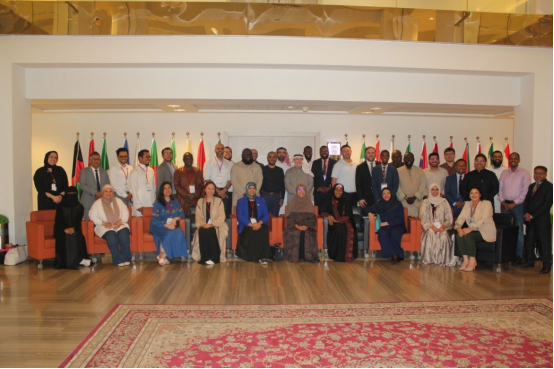
The Strategic Business Leadership Program brought together 30 leaders from 15 countries and a wide range of sectors,
making peer experience an important part of the learning itself.
The published cohort profile records 60 percent of participants as having more than ten years of professional experience, 37 percent as having five to ten years, and the remainder as having three to five years. Even if one uses only the minimum thresholds of those bands, the room represented more than 230 years of professional practice. Because most of the senior participants were simply classified as ‘more than ten years’, the actual combined experience was materially higher. It felt less like a conventional executive program and more like several centuries of decisions, setbacks, turnarounds, negotiations, institutions and hard-earned judgment compressed into ten days.
That was the first transformation for me: realizing that the curriculum was not only what appeared on the agenda. It was also the accumulated experience of the people sitting around the table. I returned to Pakistan not
simply with new frameworks, but with a sharper understanding of what leadership is for – to convert knowledge into capability, capability into institutions, and institutions into economic and social value that reaches beyond the leader.
The Cohort Was Part of the Curriculum
The program was designed around leadership, strategy, decision-making, influence, character, change and execution. Yet one of its strongest assets could not have been captured in a slide deck: the participants themselves. A discussion on risk changes when the same problem is viewed by a banker, a climate-finance professional, a technology leader and an entrepreneur. A conversation about organizational change becomes more honest when leaders from different national and institutional contexts compare what resistance actually looks like.
This was peer learning at its best. We were not only learning from faculty; we were learning from one another’s realities. That matters particularly across developing and emerging economies, where management frameworks often need to be interpreted through local context rather than copied without adaptation.
The experience also reminded me that diversity in leadership is not merely representational. It is cognitive infrastructure. When different sectors, countries and professional histories meet around a common problem, the quality of questions improves. And when the quality of questions improves, so does the possibility of better decisions.
Leadership Before Strategy
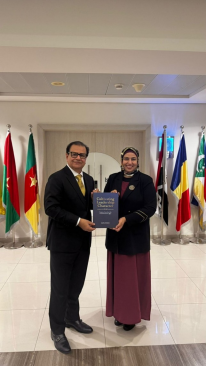
With Dr. Muhammad Azam Roomi during the program. His sessions connected leadership character,
trust and entrepreneurial leadership with responsibility and impact.
The program began where serious leadership development should begin: with the leader. Dr. Muhammad Azam Roomi’s sessions on individual leadership, emotional intelligence, entrepreneurial leadership, trust, character, belief, servant leadership and social capital repeatedly brought the conversation back to self-awareness and responsibility. His work, which spans entrepreneurship and leadership development across more than 50 countries, gave the program a perspective that connected individual character with enterprise and community impact.
The question was not only, ‘What should a leader do?’ It was also, ‘Who am I when I am making the decision? What values are operating? What am I creating in the people around me?’ That distinction matters. Leadership can become overly associated with authority, visibility or control. The program challenged that assumption. Character, trust, service and the ability to build secure relationships were treated not as soft additions to performance, but as part of the architecture of sustainable leadership.
For me, this became a genuine process of unlearning and relearning. Experience is valuable, but seniority can become dangerous if it turns into immunity from questioning. The more responsibility a leader carries, the more necessary it becomes to revisit assumptions, listen deeply and remain teachable.
From Strategic Thinking to Execution
Dr. Farzad Rafi Khan pushed us from intention into strategic thinking: competitive advantage, innovation, storytelling, influence, managing up and leading change. With 25 years of teaching experience across multiple countries, his sessions reinforced a lesson that is particularly relevant for emerging economies: strategy is not a longer plan. It is a set of choices about where value will be created, what will be different, and what an organization is prepared not to do.
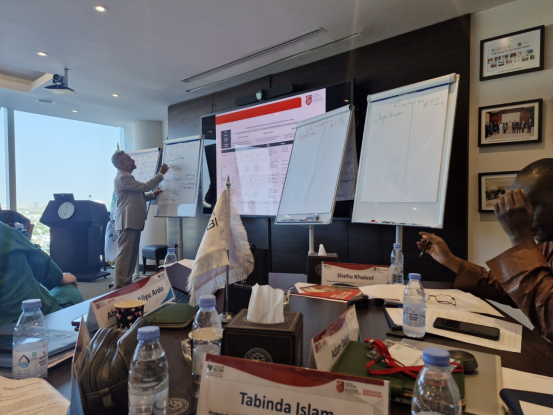
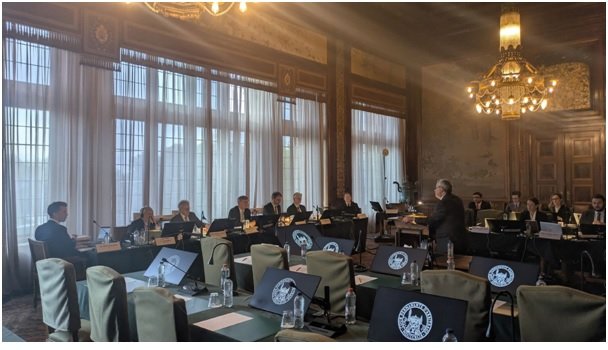
Applied classroom learning at MBSC: cases, strategic exercises and collaborative problem-solving turned concepts into decisions and action.
Dr. Zeger Degraeve, Executive Dean of MBSC and Professor of Decision Sciences, brought a different discipline to the room. Through decision-making, risk, uncertainty, bias and accountability, he challenged the executive instinct to equate confidence with quality. A decision can be confidently wrong. A good outcome can follow a weak process, and a difficult outcome can follow a sound one. For leaders responsible for people, capital and institutions, that distinction is not academic; it is governance.
Dr. Tarek El Masri completed another essential bridge: from strategy design to strategy execution. Balanced scorecards and strategy maps became reminders that ambition does not become impact until priorities are translated into ownership, measures and action. That was one of the strongest threads running through the program: strategy without execution is aspiration; execution without values or judgment can create movement without progress.
What I valued most was that the faculty did not merely transfer information. The pedagogy used cases, simulations, role-play, discussion, reflection and group work. The faculty’s credibility came not only from expertise, but from the consistency between what they taught and how they facilitated: listening, challenging, questioning and creating space for participants to think rather than simply receive answers. In that sense, they were walking the talk.
Saudi Vision 2030: Human Capability as Economic Infrastructure
Experiencing the program in Saudi Arabia gave the learning a wider policy context. Saudi Vision 2030 is frequently understood internationally through the visible markers of transformation – investment, infrastructure, tourism, diversification and new industries. But its Human Capability Development agenda makes another strategic choice equally clear: national transformation requires people who are prepared for the jobs, enterprises and uncertainties of the future.
The official Human Capability Development Program emphasizes closer alignment between education and labor-market needs, practical learning, entrepreneurship, upskilling, reskilling and lifelong learning. That philosophy was visible in MBSC’s approach. The College explicitly connects its mission to Vision 2030 through entrepreneurial leadership, experiential learning, stronger links between education and the job market, and connections among entrepreneurs, investors, financial institutions, government and other actors in the entrepreneurial ecosystem.
For me, this is one of the most transferable lessons from Saudi Arabia: human capability is not a social-sector afterthought. It is economic infrastructure. Roads, capital and technology matter, but their productivity depends on people who can recognize opportunity, make decisions under uncertainty, organize resources, build trust, innovate, execute and adapt. Leadership development, when designed well, becomes part of a country’s competitiveness strategy.
This insight has direct relevance for Pakistan. With a large young population and rapidly changing technology, our opportunity is not simply to educate more people. It is to improve the conversion from learning to productivity – to employability, entrepreneurship, enterprise creation, innovation and leadership.
IsDB: Development Beyond Finance
The Islamic Development Bank dimension of the experience expanded this perspective further. The dedicated IsDB Group Day exposed us to the broader development architecture of the Bank: private-sector development through the Islamic Corporation for the Development of the Private Sector, investment and export-credit insurance through ICIEC, international trade finance through ITFC, finance and treasury, women and youth empowerment, climate action, the global Islamic finance industry, Islamic modes of finance for business activity and Islamic microfinance.
This mattered because leadership was being placed inside a development system rather than treated as an isolated executive competency. The Islamic Development Bank’s stated mission is to foster economic development and social progress of its member countries and Muslim communities in accordance with Islamic principles. With 57 member countries, its reach also creates a natural platform for cross-border knowledge, finance, enterprise and institutional cooperation.
A session by Dr. Sami Al-Suwailem, Acting Director General of the IsDB Institute, on leadership from an Islamic perspective crystallized an important question for me: what changes when leadership is evaluated not only by what it achieves, but by the value system through which it achieves it? In that frame, growth cannot be separated from responsibility, finance from the real economy, or progress from human dignity.
The encounter also reinforced the importance of knowledge institutions within development banks. Capital can finance a project; knowledge and leadership capability can improve the quality of hundreds of projects and institutions over time. IsDBI’s work in research, capacity development, Islamic economics and finance, and knowledge-based solutions therefore has a multiplier effect that is easy to underestimate.
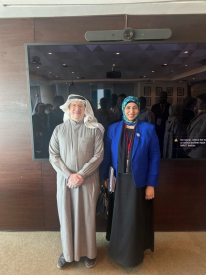
With Dr. Sami Al-Suwailem, Acting Director General of the IsDB Institute, during the IsDB Group Day in Jeddah.
For the Muslim world, the larger opportunity is to move from isolated national capacity to connected capability: leaders, institutions, entrepreneurs and knowledge networks learning across borders. The cohort itself was a small demonstration of what that can look like.
Taking the Learning Back to Pakistan
The most important question after a sponsored leadership program is not, ‘What did I learn?’ It is, ‘What will change because I learned it?’ That is where reciprocity begins. The strongest way to appreciate a program of this quality is not praise alone; it is application.
My work in Pakistan sits at the intersection of entrepreneurship, technology and digital skills, employability, women’s economic participation, leadership development, higher education and business incubation. Across these areas, my central concern is increasingly the same: how do we move people from learning to economic agency?
In current initiatives, that means combining practical learning in e-commerce and emerging technologies, including agentic artificial intelligence, with the development of minimum viable products, entrepreneurial mentoring, incubation and a deliberate pathway toward earning. The intention is to shorten the distance between training and the market. Completion of a course should not be the final outcome; the stronger outcome is whether a learner can earn, build, solve, create or employ others.
The same principle applies to leadership development. I want to take what I learned at MBSC and IsDBI into the leadership and business programs I design for emerging entrepreneurs and fellows – moving beyond motivational content toward decision quality, strategy, execution, character, negotiation, resilience and measurable business outcomes.
Higher education has an equally important role. Universities should not be measured only by how much knowledge they transmit. The acquisition, creation and dissemination of knowledge should ultimately contribute to social and economic value. Universities can become platforms for enterprise creation, applied research, commercialization, industry collaboration and local economic development. Business incubation centers, industry-academia linkages and entrepreneurial education can help transform students from passive recipients of knowledge into problem-solvers and creators of value.
Women must also be central to this economic agenda. Women’s empowerment is sometimes discussed primarily as participation. The next step is productive participation: access to skills, networks, markets, capital,
leadership opportunities and the confidence to build. When women create enterprises, enter decision-making spaces and participate in emerging sectors, the impact extends to households, employment and communities.
The program also changed how I think about the institutions I already influence. Better strategy is important, but so are better decision processes. Innovation matters, but so does execution. Growth matters, but not at the cost of trust or character. Networks matter, but they should be used to create shared opportunity rather than simply personal access. These are practical shifts, not inspirational slogans. They affect how a program is designed, how a team is evaluated, how a partnership is selected, how an investment decision is challenged and how success is measured.
Measuring the Multiplier
The return on leadership development should become visible downstream. Attendance and certificates are useful administrative measures, but they are not sufficient measures of transformation. I want the work I take forward in Pakistan to be judged by stronger questions: How many participants generated income? How many MVPs reached customers? How many ventures survived beyond incubation? How many women entered enterprise or decision-making roles? How many university-industry partnerships produced real opportunities? How many people who were trained went on to train, mentor or employ others?
The economic impact I want to pursue is therefore measurable: more market-linked skills, more viable micro and small enterprises, more young people earning through digital and entrepreneurial work, stronger commercialization of ideas emerging from universities, and more connections between Pakistani founders and regional markets. The social impact is equally important: widening access for women and young people, strengthening leadership agency, creating mentoring networks, and building institutions in which ethical conduct and accountability are treated as performance issues rather than slogans.
There is also an opportunity to connect Pakistan more deliberately with the wider IsDB member-country ecosystem. The cohort created relationships across Africa, the Middle East, Central Asia, South Asia and Southeast Asia. Those relationships can become more than an alumni directory. They can support peer advisory, university and incubator exchange, joint entrepreneurial and social-impact initiatives, women and youth enterprise collaboration, knowledge partnerships, mentoring, market access and, where appropriate, investment and development cooperation.
I also want reciprocity to be visible. One practical step is to document what changes after the program – the decisions improved, programs redesigned, enterprises supported, partnerships formed and people enabled – and to share that evidence back with the institutions and faculty who invested in us. That closes the learning loop and turns executive education from a one-time intervention into an ongoing development relationship.
Longer term, I see the possibility of a Pakistan node within a wider Muslim-world leadership and entrepreneurship network: a platform through which founders, educators, incubators, investors and development institutions can exchange knowledge and opportunity. That is how a ten-day program can continue creating value years after the classroom ends.
That is the deeper return on a program such as this. If the learning remains with 30 participants, its value is limited. If each participant transfers it into teams, classrooms, enterprises, policies, investments and communities, the multiplier becomes significant.
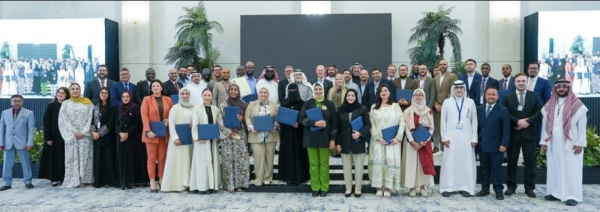
Graduation and closing moments: the certificate marked completion, but the real outcome begins after the classroom-
in the decisions, institutions and opportunities participants go on to create.
A Certificate Is Not the Outcome
The graduation moment was meaningful, but it was not the destination. I came to Saudi Arabia as a Pakistani business leader with experience, responsibilities and a defined body of work. I returned with something more valuable than another credential: a higher standard for that work.
The program strengthened my conviction that leadership should be judged by the capability it builds in others, the quality of institutions it leaves behind and the economic and social value it creates. It also reminded me that learning is never finished. The more responsibility a leader carries, the more important it becomes to unlearn, question and relearn.
For that, I am deeply grateful to the Islamic Development Bank Institute, the Islamic Development Bank Group, Prince Mohammed Bin Salman College of Business and Entrepreneurship, Dr. Muhammad Azam Roomi, Dr. Farzad Rafi Khan, Dr. Zeger Degraeve, Dr. Tarek El Masri, Dr. Sami Al-Suwailem, the IsDB teams, the program teams and the fellow leaders who brought their experience so generously into the room.
The strongest way to reciprocate that investment is through what comes next: better decisions, stronger institutions, more capable people, more enterprises, wider opportunity and deeper collaboration.
Ten days ended in Jeddah. The responsibility did not.
About The Author