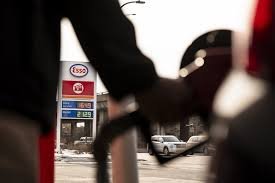
With the Easter long weekend approaching, Canadians hitting the road to see family and friends will likely be paying more at the pumps yet again.
While gas prices have risen rapidly since the war in Iran began, Patrick De Haan, a petroleum analyst at GasBuddy, cautions there likely isn’t much relief coming in the near future.
“The price of oil obviously made a big jump up today, up about 10 per cent and that is quite likely to fuel gas prices that continue to rise over the course of the weekend,” he said.
“The national average for Canada is already 180.8 [$1.80 per liter]. That has increased by nearly nine cents per liter in the past week.” In addition, De Haan said diesel prices could potentially set a new record this weekend, saying prices are expected to surpass $2.25 in the next 48 hours.
“Canadians want a way to get out of the mess that we’re witnessing. They’re going to have to spend more on airfare because the price of jet fuel has nearly doubled,” he said. Diesel is that fuel that comes from things that are a part of the economy. What have gas prices looked like across Canada?
Statistics Canada does not yet have the national and regional average retail prices for gasoline for March, the month immediately following the first time the United States and Israel launched the war against Iran in February. 28. According to Statistics Canada, the updated data will be available on April 20. At the time of publication, the Canadian Automobile Association (CAA) estimates that the national average price of regular gas in Canada is 178.5 cents per liter. The price of regular gas was at its lowest point in the previous month on March 3, 2026, when it was 134.2 cents per liter. However, consumers continue to feel the effects of the energy crunch, prompting calls from the federal Conservatives for a reduction in gas taxes. The costs that will be in effect over the long weekend contrast sharply with the average prices that were observed in February. The price spikes come after Iran throttled shipping traffic through the Strait of Hormuz, and as countries around the world grapple with ways to get their citizens to drive less and work from home more.
These were the average retail prices for one liter of gasoline across Canada in February, prior to the start of the war, as reported by Statistics Canada. Alberta: Edmonton – 118.5, Calgary – 122.1
British Columbia: 171.3 for Vancouver and 166.6 for Victoria Manitoba: Winnipeg – 123.3
Saint John, New Brunswick – 134.7 Newfoundland and Labrador: St. John’s – 144.3
Nova Scotia: Halifax – 136.5
Ontario: Ottawa-Gatineau – 131.5, Toronto – 132.2, Thunder Bay – 124.2
Prince Edward Island: Charlottetown and Summerside – 147.5
Québec has 142.6, Montréal has 150.0, and Ottawa-Gatineau has 131.5. Saskatchewan: 127.3 for Regina and 123.3 for Saskatoon Northwest Territories: Yellowknife – 133.4
Nunavut: No data are available on the website of Statistics Canada. Whitehorse, Yukon – 148.9 De Haan said the harshest increases are being experienced in the Maritimes, British Columbia, Québec, Newfoundland and Nova Scotia.
“The markets that are more prone are markets where oil can be easily diverted elsewhere,” he said.
“Essentially, Canada and the coastal regions of Canada are having now to compete with oil and refined products like gasoline and diesel that can easily be shipped away from Canada.”
About The Author